Conventional Loan Credit Score Requirements 2026
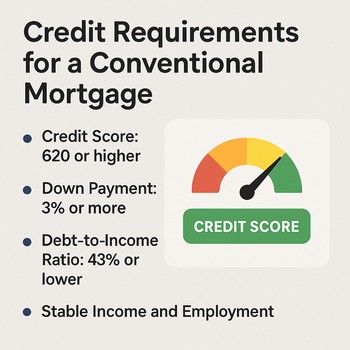 Understanding conventional loan credit score requirements is your first step toward homeownership in 2026. Your credit score is one of the most critical factors in securing a conventional mortgage. Lenders use this three-digit number to assess your creditworthiness and determine the interest rate for your home loan. Unlike government-backed FHA or VA loans, conventional loans are offered by private lenders and follow guidelines set by Fannie Mae and Freddie Mac.
Minimum Credit Score for a Conventional Loan
The minimum credit score for a conventional loan is typically 620. While this score may grant you entry into the housing market, a score of 740 or higher is required to access the most favorable interest rates and terms. The difference between a 620 and a 740 credit score can mean lower monthly payments and significant savings over the life of the loan.
Your credit score reflects your payment history, outstanding debts, and the length of your credit history. Borrowers with higher scores generally experience faster approvals and fewer conditions on their loans. To see how your score translates into buying power, try our mortgage calculators.
Beyond Your Credit Score: Qualifying for a Conventional Loan
Meeting the credit requirement for a conventional loan is just one part of the qualification process. Lenders also consider the following key factors:
- Debt-to-Income Ratio (DTI): Most lenders prefer a DTI below 43%, though exceptions may be made for borrowers with strong compensating factors like a large down payment or excellent credit. Learn more about debt-to-income ratios for conventional mortgages.
- Employment and Income: A steady employment history of at least two years in the same field is typically required. Self-employed individuals should prepare to provide two years of tax returns and profit-and-loss statements. Review our income requirements for a conventional loan.
- Down Payment and Reserves: First-time buyers can access conventional loans with as little as 3% down, but putting down less than 20% will trigger private mortgage insurance (PMI). Lenders also like to see reserves in case of emergencies. See our down payment guide for conventional loans.
Why Debt-to-Income Ratio Matters
Your DTI is a crucial metric that lenders use to determine your ability to manage monthly payments. A lower DTI indicates that you have a healthy balance between income and debt, making you a more attractive borrower. Use our mortgage calculators to estimate your DTI and monthly payments.
Key Credit Score Factors That Impact Approval
While the minimum credit score for conventional loans is 620, several factors influence your overall credit profile:
- Payment History (35% of FICO Score): Late payments, collections, or bankruptcies can severely damage your credit profile.
- Amounts Owed (30%): High credit card balances relative to your limits can signal risk to lenders and increase your DTI.
- Length of Credit History (15%): A longer credit history provides more data on your financial behavior.
- Credit Mix (10%): A diverse mix of credit types (e.g., credit cards, auto loans) demonstrates your ability to manage different debt obligations.
- New Credit (10%): Opening multiple new accounts in a short period can temporarily lower your score and raise red flags.
Understanding Conforming Loan Limits and the Secondary Market
A conforming conventional loan must adhere to rules established by Fannie Mae and Freddie Mac, which buy mortgages from lenders to provide liquidity. For 2026, the baseline loan limit for most single-family homes is $806,500 in most of the U.S., with higher limits in high-cost areas like Alaska, Hawaii, and certain metro regions. Loans that fall within these limits often receive better interest rates due to their lower risk profile.
Learn more about current conforming loan limits for 2026.
Fixed-Rate vs. Adjustable-Rate Conventional Loans
When applying for a conventional loan, you’ll have two primary options:
- Fixed-Rate Mortgage: Provides a stable interest rate and consistent monthly payments for the entire loan term (e.g., 15 or 30 years). This is ideal for buyers who plan to stay in their home long-term.
- Adjustable-Rate Mortgage (ARM): Offers a lower introductory rate for a set period (e.g., 3, 5, or 7 years) before the rate adjusts annually. This option can be advantageous if you plan to sell or refinance before the rate adjusts.
Conventional Loans vs. Government-Backed Loans
Government-backed loans like FHA, VA, and USDA loans offer more flexible credit requirements but often come with higher long-term costs:
- FHA Loans: Accept credit scores as low as 500 with a 10% down payment or 580 with 3.5% down. However, mortgage insurance is required for the life of the loan. Compare FHA vs Conventional 97 loans.
- VA Loans: Available to eligible military members with no down payment or monthly mortgage insurance, though funding fees apply. See our VA loan vs conventional loan comparison.
- USDA Loans: Offer zero-down financing for rural properties but require USDA approval and have income limits.
A key advantage of a conventional loan is the ability to cancel PMI once you reach 20% equity, saving you significant money over time. Learn when private mortgage insurance goes away.
How to Improve Your Credit Score Before Applying
If your credit score is below 620, consider taking these steps to improve it before applying for a conventional loan:
Practical Tips to Boost Your Score
- Check Your Credit Reports: Obtain free copies from Experian, Equifax, and TransUnion, and dispute any errors.
- Pay Bills on Time: Since payment history accounts for 35% of your FICO score, consistent on-time payments are crucial.
- Reduce Credit Utilization: Aim to keep your credit card balances below 30% of your limits, and ideally below 10% for the biggest boost.
- Avoid New Credit: Refrain from opening new credit accounts or taking on new debt in the months leading up to your application.
Investing time in improving your credit can yield substantial savings. For example, moving from a 620 to a 680 credit score could save you thousands in interest over a 30-year term. Use our mortgage calculators to estimate your potential savings.
Preparing Your Conventional Loan Application
Gathering the necessary documentation in advance can streamline the loan application process. Key documents include:
- Pay stubs from the past 30 days
- W-2 forms and tax returns from the last two years
- Bank statements and asset accounts
- For self-employed borrowers: profit-and-loss statements and business tax returns
When you shop for rates, remember that multiple inquiries within a 14-45 day window count as a single credit pull, minimizing the impact on your score. For a full list, see our required documents for a conventional loan.
Achieving Homeownership Through Smart Preparation
Meeting the conventional loan credit score requirements is an essential step toward homeownership. By understanding these requirements, improving your credit, and preparing your finances, you can secure favorable terms and make your dream of owning a home a reality. Work with experienced loan officers and use available resources to guide you through the process. Start with our conventional loan prequalification guide.
Frequently Asked Questions About Conventional Loan Credit Requirements
Can I qualify for a conventional loan with a 580 credit score?
Most conventional lenders require a minimum credit score of 620. However, FHA loans accept scores as low as 580 with a 3.5% down payment. Consider government-backed programs while you work to improve your score.
How much should I save for closing costs?
Closing costs typically range from 2% to 5% of the purchase price, in addition to your down payment. First-time buyers can put down as little as 3% through special programs like Conventional-97.
Does shopping for mortgage rates hurt my credit score?
Multiple mortgage inquiries within a 14-45 day window are typically counted as a single inquiry for scoring purposes. This protects your score while you compare lenders. Each hard inquiry may lower your score by fewer than 5 points.
What documents do self-employed borrowers need?
Self-employed borrowers need two years of personal and business tax returns, current profit-and-loss statements, and sometimes a letter from a CPA verifying income and business stability.
How much can I save by improving my credit score?
Improving your credit score from 620 to 680 could save you thousands in interest charges. Even a 0.25% reduction in your interest rate can save tens of thousands of dollars over the life of a 30-year loan.
Connect With Us
Please share – it really helps