Home Possible Loan: 3% Down & Income-Limited Mortgage Program
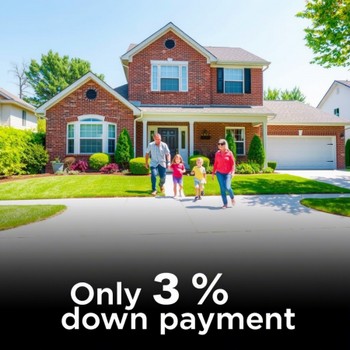 Freddie Mac's Home Possible
mortgage program helps make homeownership more achievable for individuals and families with low to moderate incomes. With a low down payment requirement and flexible qualification standards, this loan option offers an accessible route into the housing market. The Home Possible loan is designed for borrowers who earn at or below 80% of their area median income and plan to live in the home they buy.
Freddie Mac's Home Possible
mortgage program helps make homeownership more achievable for individuals and families with low to moderate incomes. With a low down payment requirement and flexible qualification standards, this loan option offers an accessible route into the housing market. The Home Possible loan is designed for borrowers who earn at or below 80% of their area median income and plan to live in the home they buy.
Whether you're a first-time buyer or looking to refinance, Home Possible gives qualified borrowers a practical way to own a primary residence. The program is consistent with Freddie Mac's mission to expand access to safe, affordable housing.
It serves a broad range of buyers, including those who may not qualify for standard conventional loans or FHA options. Unlike vacation-home or investment-property financing, Home Possible is strictly for those planning to live in the home they purchase.
What Is the Home Possible Program?
Home Possible is a mortgage program created by Freddie Mac to bolster sustainable homeownership. It targets low-income and first-time buyers who may encounter obstacles to traditional mortgage approval.
The program is especially valuable in high-cost areas where saving for a sizeable down payment can be difficult. What is a Home Possible loan? It's a conventional financing solution created specifically for borrowers earning at or below 80% of their area median income.
- Low down payment – as little as 3%
- Flexible sources for down payment funds, including gifts and grants
- Reduced mortgage insurance premiums compared to other conventional options
These features make the Home Possible mortgage a strong choice for many would-be homeowners. It's also available for refinance transactions that don't involve cash-out, giving existing homeowners a chance to lower their monthly costs.
Eligibility Requirements for Borrowers
To qualify for a Home Possible loan, applicants must meet specific guidelines tied to income, credit, property use, and education. These standards maintain responsible lending while keeping the program accessible.
Freddie Mac Home Possible guidelines are carefully structured to balance cost-effectiveness with responsible lending practices.
Credit Score and Income Limits
A Home Possible minimum credit score of 660 is required for most applicants. This is higher than the threshold for an FHA loan but more lenient than some standard conventional offerings.
Higher credit scores can help secure better mortgage interest rates and terms. Home Possible income must fall at or below 80% of the local area median income (AMI).
This rule applies to all borrowers on the loan, not just the primary applicant. The Freddie Mac Home Possible income limit varies by location and household size.
You can verify your eligibility using the Home Possible income and property eligibility tool available through approved lenders. The Home Possible lookup system helps determine if your area qualifies.
| Eligibility Factor | Requirement |
|---|---|
| Credit score | 660 or higher |
| Income | ≤ 80% of area median income (AMI) |
| Occupancy | Primary residence only |
| Homebuyer education | Required for first-time buyers |
Home Possible eligibility rules prohibit use for second homes or investment properties. The property must be your principal place of residence to qualify.
Property and Down Payment Guidelines
FHLMC Home Possible can finance several property types, including single-family homes, townhomes, condos, and 2- to 4-unit dwellings – as long as the borrower lives in one unit. This flexibility supports small-scale rental income opportunities while maintaining owner occupancy.
The Home Possible loan limits must stay within Freddie Mac's conforming limits, which vary by location. In 2026, the baseline conforming loan limit for most areas is $832,750. Check your area's specific lending limits to determine maximum borrowing capacity.
Low Down Payment Options
With just a 3% down payment, the Home Possible program reduces the upfront financial obstacle. Funds can come from savings, family gifts, or down payment assistance programs.
Gift funds are permitted with proper documentation, making it easier for family support to help with home buying. The maximum loan-to-value ratio is 97%, meaning you finance 97% of the home's appraised value.
Understanding Home Possible LTV matrix requirements helps borrowers plan their financing strategy. Use our down payment calculator to estimate your upfront costs.
Mortgage Insurance and Monthly Costs
Because the down payment is less than 20%, private mortgage insurance (PMI) is required. However, Home Possible mortgage insurance coverage offers lower premiums than standard conventional loans.
This lowers the monthly mortgage payment, improving affordability for low-income buyers. PMI can be canceled once the loan balance reaches 80% of the original home value – a standard feature of conventional loans with PMI.
The Home Possible program typically features lower mortgage insurance costs than FHA loans. Calculate your estimated payment using our mortgage payment calculator.
Home Possible vs HomeReady
Both Freddie Mac Home Possible and Fannie Mae HomeReady cater to similar audiences. They offer 3% down options, income limits, and require homebuyer education for first-timers.
Understanding Home Possible vs HomeReady differences helps borrowers choose the right program. The HomeReady vs Home Possible comparison shows important distinctions.
- Home Possible income limits: Uses 80% of AMI across all areas
- Freddie Mac Home Possible income limits: Strictly enforced at 80% AMI threshold
- Mortgage insurance: Home Possible often has lower PMI costs
- Home Possible non-occupant co-borrower: Restricted to family members in most cases
For a detailed comparison, see HomeReady vs Home Possible. Your choice may depend on your household composition, Home Possible income eligibility, and long-term plans.
Both programs offer similar benefits, but Home Possible vs HomeReady evaluation should take into account your specific financial situation.
Debt-to-Income Requirements
Home Possible DTI limits generally require ratios below 43%, though some flexibility exists with compensating factors. Lenders evaluate your total monthly debt payments against your gross monthly income.
Use our debt-to-income calculator to determine your ratio. Understanding your debt-to-income ratios helps prepare for loan approval.
Strong credit scores and cash reserves can sometimes offset higher DTI ratios. Review qualification requirements to understand all approval factors.
Refinance and First-Time Buyer Benefits
The Freddie Home Possible program isn't just for purchases. Qualified homeowners can use it to refinance and reduce their interest rate or monthly payment.
Cash-out refinance is not allowed, but rate-and-term refinancing is fully supported. Compare refinance options using our program comparison calculator.
For first-time home buyers, the program's low barriers are especially helpful. With a 3% down payment, flexible credit standards, and lower PMI, entry into homeownership is easier.
Additionally, homeownership education is mandatory for first-timers. This ensures buyers understand mortgage responsibilities, budgeting, and maintenance – key to long-term success.
Real-World Borrower Scenarios
Consider Maria, a childcare worker earning $52,000 in a mid-sized city. Her credit score is 685, and she has $8,000 saved. She qualifies under Freddie Home Possible income limits because her income is 75% of her area's AMI. With a $250,000 home, her 3% down payment totals $7,500 – well within her savings.
Or take James and Lena, a dual-income couple in a high-cost metro area. Although their combined income is $95,000, they're still below 80% of the AMI due to local housing prices. They use a $10,000 grant plus a $5,000 family gift to cover the down payment on a $500,000 condo. Their 690 credit scores meet the minimum, and they complete an approved education course.
These examples show how Home Possible closes gaps for responsible but modest-income households. The program doesn't just lower entry costs – it builds pathways to lasting homeownership.
Cost Comparison: Home Possible vs Other Options
A Home Possible mortgage typically costs less monthly than an FHA loan because of lower private mortgage insurance rates and the ability to cancel PMI earlier. Unlike FHA, which often requires mortgage insurance for the life of the loan, Home Possible borrowers can eliminate it once equity reaches 20%.
Review the pros and cons of FHA vs conventional financing.
Compared to standard conventional loans, Home Possible offers similar interest rates for comparable credit profiles – but with lower down payment flexibility and income-based eligibility. This makes it ideal for buyers who are creditworthy but income-constrained.
Explore the Conventional 97 vs FHA comparison for extra insights.
How to Apply for a Home Possible Mortgage
Working with a knowledgeable mortgage lender is the first step. Not all lenders offer Home Possible, so verify availability early.
The application process entails verifying income and assets, checking credit score and debt-to-income ratio, confirming property eligibility and occupancy intent, and completing homebuyer education if applicable.
Lenders assess your ability to repay using standard underwriting tools. Review information about automated underwriting systems to understand approval processes.
Once approved, you'll sign closing documents and take ownership of your new primary residence. The entire procedure usually takes 30–45 days from application to closing.
Is Home Possible Right for You?
If you earn at or below 80% of your area's median income, plan to live in the home, and can meet the 660 credit score minimum, Home Possible is worth exploring. It's one of the most accessible conventional options for first-time homebuyers and moderate-income repeat buyers.
Compared to an FHA loan, it avoids lifetime mortgage insurance and offers higher loan limits. Compared to standard conventional loans, it lowers down payment and insurance barriers.
The program works well for borrowers who understand credit requirements and meet income thresholds. Check our affordability calculator to determine your budget.
Ultimately, Freddie Mac's Home Possible® program creates openings that might otherwise stay closed. With mindful planning and the right lender, it can turn the dream of homeownership into reality.
To determine if this is your best option, explore more informative mortgage articles and review our mortgage calculators. For another 3% down option, research the Conventional 97 home loan.
Frequently Asked Questions
What is the difference between Home Possible and HomeReady?
Home Possible is offered by Freddie Mac, while HomeReady comes from Fannie Mae. Both require a 3% down payment and target low- to moderate-income borrowers. Home Possible restricts non-occupant co-borrowers to family members, while HomeReady allows more flexibility. Home Possible typically offers slightly lower mortgage insurance premiums, and both programs require homebuyer education for first-time buyers.
Can I use a Home Possible loan for an investment property?
No, Home Possible loans are strictly for primary residences only. You must live in the property as your main home. However, you can purchase a 2- to 4-unit property and live in one unit while renting the others. Investment properties and second homes do not qualify under Home Possible guidelines.
How do I check if I qualify for Home Possible income limits?
Your total household income must be at or below 80% of your area median income (AMI). Your lender can verify your eligibility using the Home Possible income and property eligibility tool. Income limits vary by county and household size. All borrowers on the loan application must meet the Freddie Mac Home Possible income limits requirement.
What credit score do I need for a Home Possible mortgage?
The Home Possible minimum credit score requirement is 660 for most borrowers. This is higher than FHA's 580 minimum but lower than many standard conventional loans. Higher credit scores may qualify you for better interest rates and lower mortgage insurance costs. Working to improve your credit before applying can save you money over the loan term.
Can I refinance with a Home Possible loan?
Yes, Home Possible allows rate-and-term refinancing for qualified borrowers who meet the income and credit requirements. You can refinance to lower your interest rate or change your loan term. However, cash-out refinancing is not permitted under the program. The property must remain your primary residence, and you must still meet the 80% AMI income threshold.
Connect With Us
Please share – it really helps