Jumbo vs Conventional Loan: Key Differences for 2026
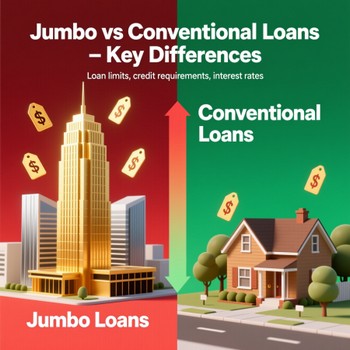 Choosing between a jumbo loan and a conventional loan is one of the most important decisions you'll make when financing a home. The jumbo vs conventional loan comparison comes down to one core factor: loan size. A jumbo mortgage exceeds the conforming loan limits set by the Federal Housing Finance Agency (FHFA), while a conforming conventional loan stays within those limits. That single distinction ripples through your interest rate, down payment, credit score requirements, and the entire qualification process. For a foundational understanding, start with our complete guide to the conventional loan.
Navigating the mortgage market for a high-balance loan can be confusing. Understanding the nuances between a jumbo and a conventional mortgage is essential for selecting a product that aligns with your financial goals. Your choice directly affects your monthly mortgage payments and your long-term financial health. This comprehensive guide breaks down how both loan types work, who they are best suited for, and provides a clear framework to help you decide which path is right for you.
What Is a Jumbo Loan?
A jumbo loan is a mortgage that surpasses the conforming loan limit established annually by the FHFA. Because these loans are too large to be purchased by government-sponsored enterprises like Fannie Mae and Freddie Mac, they are considered non-conforming. This status means they carry different, often stricter, underwriting guidelines. Lenders perceive them as higher risk, necessitating a stronger financial profile from borrowers.
The FHFA updates loan limits each year. For 2024, the baseline conforming loan limit for a single-family home in most U.S. counties is $766,550. In designated high-cost areas, this limit can be as high as $1,149,825. Any mortgage amount exceeding your county's specific limit is classified as a jumbo mortgage. Borrowers looking to purchase expensive properties in cities like New York, San Francisco, or Los Angeles will frequently need a jumbo loan. Be sure to check our conforming loan limits for 2026 for the most up-to-date thresholds.
Qualifying for a jumbo mortgage is more demanding. Lenders typically require excellent credit, significant liquid cash reserves, and a low debt-to-income ratio. These loans often mandate larger down payments. While some jumbo loan programs ask for a minimum of 20% down, others may accept 10% or 15% down for borrowers with exceptionally strong credit and financial reserves.
What Is a Conventional Loan?
A conventional loan is a mortgage not insured or guaranteed by the federal government. When the loan amount is at or below the conforming limit, it becomes a conforming conventional loan. These loans adhere to the rules set by Fannie Mae and Freddie Mac, who purchase them from lenders, ensuring a steady flow of capital in the housing market. This is the most common type of mortgage used for home purchases.
Conforming loans must meet specific guidelines. The minimum credit score is typically 620, and down payments can be as low as 3% for qualified first-time homebuyers. Private mortgage insurance (PMI) is required if the down payment is less than 20%. Due to their lower risk profile, these mortgages often offer competitive mortgage rates. Explore our guide on 3% down conventional loan programs for low-down-payment options.
The primary appeal of a conventional loan is its flexibility and broad availability. Borrowers can choose from various loan terms, including 15-year and 30-year fixed-rate options, or adjustable-rate mortgages. Because they conform to standard guidelines, these mortgages are widely accessible through banks, credit unions, and mortgage brokers across the country.
Key Differences Between Jumbo and Conventional Loans
The distinction between a jumbo and a conventional mortgage goes far beyond the loan amount. Several critical factors differentiate them, and understanding these will help you determine the right loan type for your situation.
Loan Limits
The most straightforward difference is the amount you can borrow. Conforming loans are capped by the limits set by the Federal Housing Finance Agency. Jumbo loans exceed these caps. For 2024, the baseline is $766,550, with a high-cost area ceiling of $1,149,825. Anything above this is a jumbo mortgage. For the latest 2026 figures, refer to our conforming loan limits guide. Since loan limits are adjusted annually based on home price fluctuations, a loan that was jumbo last year could become conforming this year if limits rise.
Interest Rates
Historically, jumbo loan rates were higher than conforming rates. However, this trend has shifted. Today, jumbo mortgage rates are often comparable to, and sometimes even lower than, rates for standard conforming loans due to intense competition for high-wealth borrowers. Your personal rate, however, is heavily dependent on your financial strength. Borrowers with excellent credit, large down payments, and substantial reserves will secure the best rates for jumbo loans. Check our daily mortgage rate page for current pricing trends.
Down Payment Requirements
Standard mortgages offer accessibility with down payments as low as 3%. In contrast, jumbo loans typically require a minimum down payment of 10% to 20%. For very large jumbo mortgages, some lenders might ask for 30% down. The exact requirement depends on the loan amount and your credit profile. Additionally, jumbo loans may require you to have substantial cash reserves after closing, often covering 6 to 12 months of mortgage payments, to protect the lender in case of financial hardship.
Credit Score Requirements
The minimum credit score standards differ significantly. For a conforming conventional loan, you can qualify with a score as low as 620. For jumbo loans, lenders typically look for a score of 700 or higher, with many requiring 720 to 740 to secure the best terms. The larger the loan, the stronger your credit needs to be. See our detailed guide on conventional loan credit score requirements.
Debt-to-Income (DTI) Ratio
Your DTI ratio compares your monthly debt payments to your gross monthly income. Standard mortgages typically allow DTI ratios up to 45% or 50%. Jumbo loans are more conservative. Most lenders prefer a debt-to-income ratio below 43%, and some aim for 36% or lower. A lower DTI demonstrates to lenders that you can comfortably manage a large monthly mortgage payment. Use our debt-to-income calculator to assess your position.
Cash Reserves
Cash reserves are one of the most overlooked differences between jumbo and conventional loans. Conforming loans rarely require more than zero to two months of reserves. Jumbo lenders, by contrast, typically want to see 6 to 12 months of PITI (principal, interest, taxes, and insurance) in verified liquid assets after closing. If you're buying an investment property or a second home, that requirement can climb to 12 to 18 months. This cushion protects the lender if your income is interrupted, and it's a hard requirement for most jumbo programs.
Appraisal and Underwriting
Conforming loans generally use a standard appraisal process and automated underwriting through Fannie Mae's Desktop Underwriter or Freddie Mac's Loan Product Advisor. Jumbo loans often require a more detailed, full appraisal—sometimes a second review appraisal for very high values—and manual underwriting. Expect more documentation, longer timelines, and closer scrutiny of self-employment income, asset statements, and large deposits.
Qualifying for a Jumbo vs Conventional Loan
While the application process appears similar, the qualification requirements vary significantly. Here is a comparison of what lenders evaluate for each loan type:
- Credit Score: Standard mortgages accept lower scores (620+). Jumbo loans demand excellent credit (700+).
- Down Payment: Standard mortgages accept 3% down. Jumbo loans require 10% to 20% minimum. See lowest down payment for a conventional loan for comparison.
- Cash Reserves: Standard mortgages rarely require reserves. Jumbo loans often require 6 to 12 months of PITI (Principal, Interest, Taxes, Insurance) in the bank.
- Debt-to-Income Ratio: Standard mortgages allow up to 50%. Jumbo loans prefer below 43%.
- Income Documentation: Both require full documentation, but jumbo loans may require more extensive proof of stable income and assets, especially for self-employed borrowers.
- Appraisal Requirements: Jumbo loans often require a more detailed and comprehensive appraisal. Standard mortgages use a standard appraisal process.
To qualify for a jumbo loan, you need to demonstrate a robust capacity to handle the payment. This involves scrutiny of your income, assets, and credit history. To qualify for a conventional mortgage, the process is more streamlined, often using automated underwriting systems that evaluate loans against standard guidelines. For comprehensive financial planning, visit our mortgage calculators hub.
Jumbo Mortgage vs Conventional: Which Loan Is Right for You?
Deciding between a jumbo mortgage and a conventional loan hinges on your target home price and financial profile.
When a Jumbo Loan Makes Sense
A jumbo loan is ideal if you're buying a high-value property. If the purchase price exceeds the conforming limit in your area, a jumbo mortgage is your primary option. It's also a good choice for borrowers with strong finances - excellent credit, a sizable down payment, and substantial cash reserves. You might also consider a jumbo loan for a luxury property, a second home, or an investment property in an expensive market, though terms for investment properties can be stricter.
When a Conventional Loan Makes Sense
A standard mortgage is the right choice if your loan amount falls within the conforming limit. This is the case for the vast majority of home purchases. It works well for first-time buyers, those with moderate incomes, and buyers with smaller down payments. If your credit score is average or you have limited cash reserves, conventional loans offer greater flexibility. They are also a good option if you want to minimize upfront costs. You can also cancel private mortgage insurance once you reach 20% equity, saving you money over time. Explore our Conventional 97 loan for a low-down-payment solution.
Comparing Jumbo and Conventional Loan Costs
The table below provides a side-by-side comparison of typical costs and requirements for a conforming loan and a jumbo loan.
| Cost Factor | Conforming Conventional Loan | Jumbo Loan |
|---|---|---|
| Loan size | $726,200 (example) | $1,000,000 |
| Interest rate | 6.5% | 6.25% |
| Down payment | 5% minimum | 20% typical |
| Private mortgage insurance | Required under 20% down | Usually not required |
| Credit score needed | 620 minimum | 700+ minimum |
| Cash reserves required | 0–2 months | 6–12 months |
| Closing costs | 2–5% of loan amount | Similar percentage |
Interest rates are constantly changing. Always check current mortgage rates from multiple lenders. The lowest rate might come with higher fees, so consider the Annual Percentage Rate (APR) to understand the true cost. Your ideal loan option depends on your long-term goals. Run the numbers with our mortgage payment calculator before you commit.
How to Choose the Right Mortgage for Your Situation
Start by determining your required loan amount and checking the conforming loan limit for your county. If you need more than the limit, you'll need a jumbo loan. If you're below the limit, you can choose between conforming and jumbo products. Next, assess your finances: review your credit score, calculate your DTI ratio, and tally your available cash for down payment and reserves. Compare these numbers against the requirements for each loan type.
Finally, shop around. Jumbo loan requirements and jumbo rates vary significantly between lenders. Credit unions and mortgage brokers can also offer competitive jumbo programs. Gathering at least three quotes will help you balance the monthly payment, upfront costs, and your likelihood of approval.
Frequently Asked Questions
What is the main difference between a jumbo and conventional loan?
The main difference is the loan amount. A jumbo loan exceeds the conforming loan limits, while a conforming conventional loan falls within them. Jumbo loans also have stricter qualification standards for credit, down payment, and reserves.
Are jumbo loan rates higher than conventional rates?
Not always. Jumbo loan rates can be similar to, or even lower than, conventional rates, especially for well-qualified borrowers. Your financial profile and market conditions play a significant role.
What credit score do I need for a jumbo mortgage?
Most lenders require a credit score of 700 or higher for a jumbo mortgage, with many preferring 720+. This is significantly higher than the 620 minimum for standard mortgages.
Can I get a jumbo loan with 5 percent down?
This is very uncommon. Most jumbo loans require a down payment of 10% to 20% minimum. Larger down payments improve your approval odds and can secure you better rates.
Do jumbo loans require private mortgage insurance?
Jumbo loans typically do not require private mortgage insurance. Instead, lenders compensate for the risk by charging a slightly higher interest rate or through other adjustments.
How much money do I need in reserves for a jumbo loan?
Most jumbo lenders require 6 to 12 months of PITI (principal, interest, taxes, and insurance) in verified liquid reserves after closing. Larger loan amounts and investment properties may push reserve requirements higher, sometimes to 18 months or more.
Can I refinance a conventional loan into a jumbo loan?
Yes. If your home has appreciated or you have paid down your balance, a cash-out or rate-term refinance could push your new loan above the conforming limit, making it a jumbo refinance. The same stricter credit, DTI, and reserve guidelines apply.
Connect With Us
Please share – it really helps