Required Documents for a Conventional Loan Application
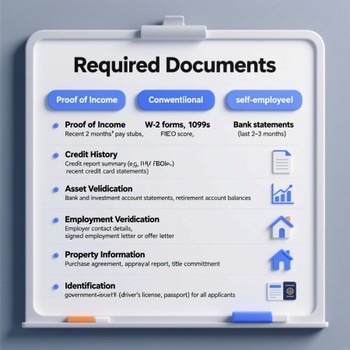 Applying for a conventional loan requires meticulous preparation. Unlike government-backed loans such as FHA or VA, conventional loans are not insured by federal agencies. This makes lenders particularly thorough in their underwriting process. Having the required documents for a conventional loan ready before you apply is the single most effective way to avoid delays and ensure a smooth path to closing.
Income Verification Documents for Your Mortgage
Employment Documentation
Pay Stubs: Provide your most recent 30 days of pay stubs that clearly show year-to-date earnings. These documents must display your gross income, all deductions, and your net pay. If you are self-employed, you should provide a current year-to-date profit and loss statement.
Employment Verification Letter: A formal letter from your employer on company letterhead confirming your position, current salary, and the date you started working there. This letter should be dated within 30 days of your loan application. To start this process, learn more about how to get prequalified for a conventional loan.
Tax Returns: You will need two years of complete federal tax returns, including all schedules, W-2 forms, and 1099 forms. Self-employed borrowers must also provide business tax returns and all relevant 1099 forms showing all income sources.
Additional Income Sources
Lenders will also want to verify any extra income streams you have. This includes:
- Rental Property Income: Lease agreements and a history of rental payments.
- Government Benefits: Social Security, disability, or pension award letters.
- Retirement Income: 401(k) or IRA distribution statements.
- Court-Ordered Income: Alimony or child support court orders and payment history.
- Investment Income: Dividend and interest statements from investment accounts.
Asset and Bank Statement Verification
Bank Statements
Provide two to three months of complete bank statements for all accounts, which typically includes:
- Checking accounts
- Savings accounts
- Money market accounts
- Certificates of deposit (CDs)
- Investment accounts (401k, IRA, stocks, bonds)
Statements must show account numbers, balances, and transaction history. Large, non-payroll deposits may require a letter of explanation and supporting documentation.
Down Payment Source
You must document the source of your down payment funds. Acceptable documentation includes:
- Bank statements showing a history of accumulated savings.
- Gift letters for gifted funds, along with the donor's bank statements. Be sure to review the gift money rules for conventional loans.
- Documentation for the sale of assets (e.g., a vehicle or stocks).
- Withdrawal statements from retirement accounts.
Credit and Debt Documentation
Credit Authorization
You will need to sign authorization forms allowing your lender to pull credit reports from all three major bureaus (Experian, Equifax, TransUnion).
Credit Explanations
If you have any derogatory credit events, prepare a written explanation for each. This includes:
- Late payments (30+ days)
- Accounts in collections
- Bankruptcies
- Foreclosures
- Short sales
Monthly Debt Obligations
Provide statements for all recurring monthly debts, which will be used to calculate your Debt-to-Income (DTI) ratio. This includes:
- Credit card statements (most recent)
- Auto loan statements
- Student loan statements
- Personal loan documentation
- Child support or alimony payment records
Lenders calculate your debt-to-income ratio using verified income and debt information. Conventional loans typically require DTI ratios below 43%, though some programs allow higher ratios with compensating factors. Use our free DTI calculator to see where you stand before applying.
Property and Identity Documentation
Property Documentation
Purchase Contract: A fully executed purchase agreement detailing the property price, terms, and conditions of sale.
Property Appraisal: Your lender will order a professional appraisal, but you may need to provide property information and access arrangements.
Insurance Documentation: Homeowners insurance quotes showing adequate coverage for the loan amount, with the lender listed as the mortgagee.
Identity Verification
- Government-issued photo ID (driver's license or passport)
- Social Security card
- Permanent resident card (if applicable)
Special Circumstances and Additional Documents
Divorce Documentation
If applicable, provide your final divorce decree, property settlement agreements, and alimony or child support court orders.
Bankruptcy Documentation
If you have a bankruptcy history, you will need your complete bankruptcy papers, discharge documentation, and a letter explaining the circumstances that led to it.
First-Time Homebuyer Programs
Some conventional loan programs offer benefits for first-time buyers and may require a homebuyer education certificate, additional income documentation, or proof of rental history.
Investment Properties
For investment property purchases, you may need to provide rental agreements for other properties you own, property management agreements, and landlord experience documentation.
Tips for a Smooth Document Submission Process
Organization: Create a digital folder with all documents clearly labeled (e.g., "2024_W2s," "Oct_Bank_Statements"). This makes it easier for your loan officer to review.
Timeliness: Ensure all documents are current. Most lenders require documents dated within 30-60 days of the application.
Completeness: Provide complete documents. Partial bank statements or tax returns are a leading cause of underwriting delays.
Honesty: Be transparent about your financial situation. Undisclosed debts or income sources discovered during underwriting can derail your application.
Communication: Keep open communication with your loan officer. If you are unsure about a requirement, ask before you submit.
Frequently Asked Questions (FAQs)
Why is documentation so important for a conventional loan?
Conventional loans are not insured by the government, so lenders assume all the risk. Thorough documentation proves your financial stability and ability to repay the loan, which is crucial for the lender's decision-making process.
How far back do I need to provide documentation?
Typically, lenders require two years of tax returns, two years of W-2s, and the last 30-60 days of pay stubs and bank statements. The exact timeframe can vary based on your employment and financial situation.
What if I have a large deposit in my bank account?
You will need to provide a letter of explanation and documentation showing the source of the large deposit. This is to ensure it is not a loan that would affect your debt-to-income ratio.
Do self-employed borrowers need additional documents?
Yes. Self-employed borrowers typically need to provide business tax returns, a year-to-date profit and loss statement, and sometimes a business license or CPA letter to verify self-employment income.
Conclusion
Gathering the required documents for a conventional loan is a critical step in the home-buying process. While the list may seem extensive, providing complete and accurate information upfront is the best strategy to ensure a smooth, fast approval. Working with an experienced loan officer can help you navigate the specific requirements for your situation and ensure you are fully prepared for the conventional loan application process.
Proper documentation demonstrates your creditworthiness and helps lenders make informed decisions, ultimately helping you achieve your goal of homeownership.
Connect With Us
Please share – it really helps