Fannie Mae HomeReady Loan: Complete Guide for 2026
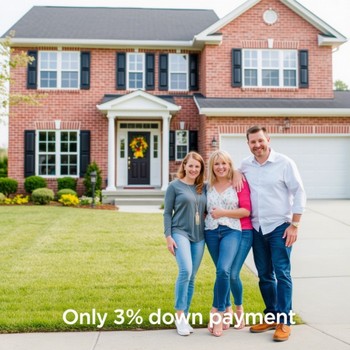 The Fannie Mae HomeReady Loan is a conventional mortgage designed to help low- and moderate-income borrowers achieve homeownership. It offers a low 3% down payment, flexible income rules, and reduced mortgage insurance. This program is ideal for first-time buyers and those with non-traditional income sources.
What Is the Fannie Mae HomeReady Loan?
The HomeReady mortgage is a conventional loan backed by Fannie Mae. Unlike government-backed loans such as FHA or VA loans, it follows Fannie Mae's guidelines but offers more flexible qualification standards. It targets qualified borrowers who may not meet the stricter requirements of standard conventional loans.
A key feature is that it allows income from non-borrowing household members - such as adult children or relatives - to count toward qualifying. This broadens access for multi-generational or shared-income households. The program also supports down payment assistance and homebuyer education.
Eligibility Requirements for the HomeReady Mortgage
To qualify for a HomeReady loan, applicants must meet several key criteria set by Fannie Mae. These include income limits, property type restrictions, and credit standards.
Income Limits and Area Median Income
Your household income cannot exceed 80% of the area median income for your location. This income limit ensures the program serves low- and moderate-income buyers. HomeReady income limits vary by county and are updated annually. Check our 2026 conforming loan limits for reference.
Unlike some programs, the HomeReady mortgage does not require you to live in a low-income area - just that your income meets the cap relative to local median earnings.
Property and Occupancy Rules
The HomeReady mortgage program only finances a primary residence. Eligible properties include single-family homes, townhomes, condos, and 2- to 4-unit buildings - as long as the borrower lives in one unit. Borrowers must also complete a homebuyer education course approved by Fannie Mae.
Benefits of the HomeReady Loan
- Minimum down payment as low as 3%
- Lower mortgage insurance costs compared to FHA loans
- Flexible income rules that help you qualify with nontraditional earnings
- Rent from roommates or family members can be used as qualifying income
This inclusiveness helps more families buy a home, even with irregular income streams. Additionally, HomeReady allows higher debt-to-income ratios (up to 50%) with strong compensating factors. Use our debt-to-income calculator to see where you stand.
How to Qualify for a HomeReady Loan
Qualifying involves meeting credit, income, and documentation standards established by Fannie Mae. The process is similar to other conventional loans but with added flexibility.
Credit Score and Down Payment Requirements
The minimum credit score required is typically 620. Borrowers with a higher credit score (740+) may receive the best interest rates and lower mortgage insurance premiums. You must also make a down payment of at least 3%. If your down payment is less than 20%, you'll pay mortgage insurance - which can be canceled once you reach 20% equity. See our credit score requirements for details.
Debt-to-Income Ratio and Reserves
Your total monthly payments must generally stay below 50% of your gross income. Use our debt-to-income calculator to estimate your ratio.
HomeReady vs. Other Mortgage Programs
| Feature | HomeReady | FHA Loan | Home Possible |
|---|---|---|---|
| Minimum Down Payment | 3% | 3.5% | 3% |
| Min Credit Score | 620 | 580 | 620 |
| Mortgage Insurance | Cancelable at 20% equity | Often lifetime | Cancelable at 20% equity |
| Income Limit | 80% of area median | None | Varies by location |
Freddie Mac offers a similar product called the Home Possible loan. While nearly identical, HomeReady is frequently preferred for its wider acceptance of non-borrower income. Learn more in our HomeReady vs. Home Possible comparison.
For those considering government-backed options, the HomeReady vs. FHA analysis shows clear advantages in long-term cost and flexibility.
Application Process and Approval Timeline
To get approved, start by connecting with a mortgage lender experienced in HomeReady loans. You'll need:
- Two years of tax returns and W-2s
- Recent pay stubs
- Bank statements
- Proof of non-borrower household income (if applicable)
After submitting your application, underwriting typically takes 30 to 45 days. Use our down payment calculator to organize your budget. For a full list of documents, see required documents for a conventional loan.
Frequently Asked Questions
Do HomeReady loans follow conforming loan limits?
Yes. They must stay within 2026 conforming loan limits - $832,750 in most areas, up to $1,249,125 in high-cost counties.
Can I use HomeReady in a high-cost area?
Yes, as long as your loan stays under the local high-balance limit. Jumbo loans are not allowed.
How often do limits change?
Annually, based on home price trends. HomeReady automatically corresponds to these updates.
What if my loan is just above the limit?
You won't qualify. Consider a larger down payment or alternative mortgage programs, such as a jumbo loan.
What is the minimum down payment for a HomeReady loan?
The minimum down payment is 3% of the purchase price. This applies to primary residences, including single-family homes, townhomes, and condos.
Can I use gift funds for the down payment?
Yes, gift funds are allowed for the entire down payment, closing costs, and reserves. A gift letter and documentation of the transfer are required.
Does HomeReady require mortgage insurance?
Yes, if your down payment is less than 20%, you'll pay private mortgage insurance (PMI). However, HomeReady PMI rates are often lower than FHA mortgage insurance and can be canceled once you reach 20% equity.
Connect With Us
Please share – it really helps