HomeReady vs Home Possible: A Complete 2026 Comparison
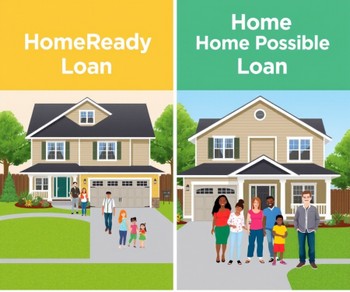 The HomeReady vs Home Possible decision is one of the most important choices for buyers using a 3% down conventional loan. Saving for a large down payment is often the biggest hurdle to buying a home. Fortunately, Fannie Mae's HomeReady and Freddie Mac's Home Possible programs are designed to help you buy a home with as little as 3% down.
Both options are geared toward first-time buyers and those with moderate incomes. This complete guide breaks down the subtle but critical differences, helping you decide which mortgage is the best fit for your financial situation.
Quick Verdict: Which Loan is Right for You?
- Choose HomeReady if: Your credit score is between 620-659 OR you plan to have a roommate whose rent you can use to qualify.
- Choose Home Possible if: Your credit score is 660+ and you are buying a manufactured home, co-op, or condo that might have restrictions. It also offers more flexibility with property types.
- Choose Either if: You have a 660+ credit score, are buying a standard single-family home, and don't need to use a roommate's rent to qualify. In this case, compare interest rates from lenders.
What Are HomeReady and Home Possible Mortgages?
Fannie Mae and Freddie Mac are government-sponsored enterprises that buy loans from lenders, allowing those lenders to offer more flexible borrowing options. HomeReady is Fannie Mae's affordable loan program, while Home Possible is Freddie Mac's version.
Both programs are designed to help low- to moderate-income borrowers achieve homeownership with a down payment as low as 3%. They serve as strong alternatives to FHA loans, and because they are conventional loans (not government-backed), they typically come with reduced long-term costs - particularly when it comes to private mortgage insurance (PMI).
If you are still exploring all your low-down-payment options, our guide to 3% down conventional loan programs compares HomeReady and Home Possible alongside HomeOne and Conventional-97.
HomeReady Loan Program: Key Features
HomeReady is available to both first-time and repeat buyers. It's built with flexibility in mind, especially for households with multiple income streams.
Down Payment Requirements
A 3% down payment is required. Funds can come from savings, family gifts, or grants. There's no requirement to use your own money.
Using Rental Income to Qualify
If you plan to have a roommate who isn't on the loan, their rent can be used to help you qualify. This is a unique feature that can have a considerable impact in high-cost areas and is the biggest differentiator between the two programs.
Income and Credit Flexibility
Income eligibility is based on the area's median income, with exceptions for properties in low-income neighborhoods. HomeReady accepts a minimum credit score of 620 and even allows for nontraditional credit histories.
Mortgage Insurance and Education
HomeReady offers reduced PMI compared to standard conventional loans. A homebuyer education course is required for all borrowers.
Home Possible Loan Program: Key Features
Freddie Mac's Home Possible loan is very similar, offering many of the same benefits for buyers with limited savings, but with its own set of rules.
Down Payment and Source of Funds
A 3% down payment is required. Gifts and grants can cover the full down payment and closing costs.
Credit Score Requirements
The program is designed to serve both first-time and repeat buyers, but it requires a slightly higher minimum credit score of 660. This is a key difference from HomeReady.
Property Type Flexibility
Home Possible offers broader property type options, allowing for 1-4-unit properties, condos, co-ops, planned-unit developments (PUDs), and manufactured homes (with restrictions). This makes it a better choice for certain property types.
Rental Income and Education
Unlike HomeReady, Home Possible does not allow a non-borrower's rent to count toward qualification. A homebuyer education course is required for all first-time buyers.
Head-to-Head: HomeReady vs Home Possible Comparison Table
While the two programs are nearly identical on the surface, the differences in credit score, rental income, and property types determine which is right for you.
| Feature | HomeReady (Fannie Mae) | Home Possible (Freddie Mac) |
|---|---|---|
| Down Payment | 3% minimum | 3% minimum |
| Credit Score | Minimum 620 (nontraditional credit accepted) | Minimum 660 |
| Income Limit | 80% of Area Median Income (AMI) - Check AMI | 80% of Area Median Income (AMI) - Check AMI |
| Rental Income | Allowed from a non-borrower roommate | Not typically allowed for qualification |
| Homebuyer Education | Required for all borrowers | Required for all first-time buyers |
| Property Type | 1-4 units, primary residence | 1-4 units, condos, co-ops, PUDs, manufactured homes (with restrictions) |
The biggest difference: If you plan to use rental income from a roommate to help qualify for the loan, HomeReady is the clear winner. If you are buying a manufactured home or co-op, Home Possible is likely your better option.
Income Limits and Geographic Rules
Both programs use Area Median Income (AMI) to set caps. In most cases, your income cannot exceed 80% of the AMI for the area where the property is located. However, exceptions often apply for homes in low-income neighborhoods, where income limits may be waived or increased.
Both loans are strictly for primary residences. You cannot use them for investment properties or second homes. If you are considering a rental property instead, see our guide to conventional loans for rental properties.
Costs: Mortgage Insurance and Interest Rates
A key advantage of both programs is cheaper mortgage insurance. Because Fannie Mae and Freddie Mac view these loans as lower risk, they offer lower PMI rates than standard conventional loans. This keeps monthly payments more affordable.
While both programs are flexible with credit scores, a higher score will still secure you a better interest rate. When compared to FHA loans, these conventional options typically offer lower overall monthly costs and, importantly, you can cancel PMI once you reach 20% equity, whereas FHA insurance often lasts the life of the loan.
How to Qualify for HomeReady or Home Possible
Qualifying for either loan follows a similar process to a standard mortgage. Use our mortgage calculators to estimate your monthly costs.
Stable Income and Employment
Lenders will verify your job history and ability to pay.
Debt-to-Income Ratio (DTI)
Your monthly debts must be within a manageable range compared to your income. Learn more about conventional loan DTI requirements.
Credit Score
While a score of 620 or higher is common for HomeReady, Home Possible requires 660. Some lenders may have overlays (stricter requirements), so always check. Our guide to conventional loan credit score requirements explains how lenders evaluate your score.
Down Payment Source
Gifts and grants are accepted. No personal funds are required.
Occupancy
You must live in the home as your primary residence.
HomeReady vs Home Possible vs FHA Loans
Many first-time buyers default to an FHA loan, but it's worth comparing your options. See our full HomeReady vs FHA comparison for a deeper dive.
| Feature | HomeReady / Home Possible | FHA Loans |
|---|---|---|
| Down Payment | 3% | 3.5% |
| Credit Score | Minimum 620 (HomeReady) / 660 (Home Possible) | Minimum 580 (with 3.5% down); 500-579 (with 10% down) |
| Mortgage Insurance | Cancelable once you reach 20% equity | Often required for the life of the loan (if down payment is less than 10%) |
| Rental Income | Allowed (HomeReady only) | Not allowed |
| Credit Flexibility | Moderate | High |
If you have good credit and want the ability to cancel PMI later, HomeReady or Home Possible will likely save you more money over time. For a broader comparison, see is a conventional mortgage better than FHA.
Pros and Cons at a Glance
Pros of Both Programs
- Low 3% down payment removes a major barrier to entry
- Reduced PMI keeps monthly costs low
- Flexible down payment sources (gifts, grants)
- Ability to cancel PMI after reaching 20% equity
Cons of Both Programs
- Income limits may disqualify higher earners
- Property must be a primary residence in an eligible location
- Homebuyer education course is required (though it's a valuable resource)
Frequently Asked Questions
What is the main difference between HomeReady and Home Possible?
There are multiple key differences. HomeReady allows you to use a roommate's rental income to qualify; Home Possible does not. Additionally, HomeReady requires a minimum credit score of 620, while Home Possible requires 660. Home Possible also offers greater property-type flexibility, allowing manufactured homes and co-ops.
Can I use gift money for the down payment on either loan?
Yes. Both programs allow the entire down payment and closing costs to be paid with gifts, grants, or other assistance programs. No personal funds are required. For more details, see our guide to gift money for a conventional loan.
What credit score do I need for HomeReady vs Home Possible?
HomeReady requires a minimum score of 620, while Home Possible requires a minimum score of 660. A higher score will help you secure a better interest rate with either program. If your score is below 620, you may need to explore FHA loans or work on improving your credit first.
Are HomeReady and Home Possible only for first-time buyers?
No. Both programs are available to repeat buyers as well. HomeReady requires education for all borrowers, while Home Possible requires it only for first-time buyers.
How do income limits work for these programs?
Limits are generally set at 80% of the area median income (AMI). However, exceptions exist for properties in low-income areas. Your lender can help you determine the specific limits for your situation. Use the AMI lookup tools provided by Fannie Mae or Freddie Mac to verify eligibility for your specific property address. You can also review our guide to income requirements for a conventional loan.
Final Takeaway: How to Choose
HomeReady and Home Possible are powerful, flexible tools that make homeownership accessible for millions of Americans. By granting a low 3% down payment, reduced mortgage insurance, and flexible income requirements, they remove many of the traditional barriers to buying a home.
If you're considering a roommate to help with costs, HomeReady offers a distinct advantage. If you're buying a non-standard property type like a manufactured home, Home Possible is your best bet. For most other scenarios, both programs provide exceptional value. The best way to start is to speak with a trusted mortgage lender who can review your finances and guide you toward the right choice for your future home.
Use our Down Payment Calculator to see how much you'll need to save for your new home. If you're still deciding between loan types, compare Conventional 97 vs FHA and review the lowest down payment for a conventional loan.
Connect With Us
Please share – it really helps