FHA vs Conventional Loan: Which Mortgage Is Right for You?
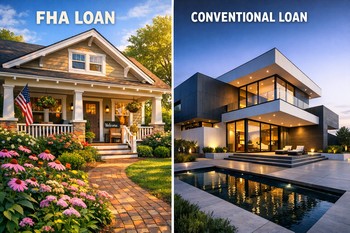 Choosing between an FHA loan and a conventional loan is one of the most important financial decisions you'll make when buying a home. The difference between FHA and conventional loans comes down to credit requirements, down payment minimums, mortgage insurance rules, and long-term costs. Each loan type serves different borrower profiles, and understanding these differences can save you thousands of dollars over the life of your mortgage.
FHA loans are government-backed mortgages designed to help first-time buyers and borrowers with lower credit scores. They offer more flexible qualification guidelines than conventional loans. Conventional loans require stronger financial profiles but offer better long-term value for qualified borrowers.
Ready to compare costs? Use our loan comparison calculators →
FHA vs Conventional Loans: Quick Comparison
Before diving into the details, here's a quick overview of the key differences between FHA and conventional loans:
| Feature | FHA Loans | Conventional Loans |
|---|---|---|
| Credit Score Minimum | 580 (3.5% down) / 500 (10% down) | 620+ (higher preferred) |
| Down Payment | As low as 3.5% | 5% minimum, 20% to avoid PMI |
| Mortgage Insurance | MIP: Upfront + annual, often for life | PMI: Cancelable at 20% equity |
| Interest Rates | Lower for lower credit scores | Better rates for strong credit |
| Debt-to-Income Ratio | Up to 50% allowable | Usually 43-48% maximum |
| Appraisal Standards | Stricter minimum property standards | More flexible, allows fixer-uppers |
| Loan Limits | Based on county median home prices | Higher limits, jumbo loans available |
| Best For | First-time buyers, lower credit, limited savings | Strong credit, larger down payment, long-term owners |
FHA Loans: Features, Benefits, and Who They're For
Since 1934, the Federal Housing Administration (FHA) has helped millions of Americans achieve homeownership. FHA loans are designed to make homeownership accessible to borrowers who might not qualify for conventional financing.
Key FHA Loan Benefits
- Lower Credit Score Requirements: Qualify with a score as low as 580 for a 3.5% down payment, or 500-579 with 10% down.
- Smaller Down Payment: Put down as little as 3.5%, making homeownership more attainable.
- Higher Debt-to-Income Ratios: Allow up to 50% DTI, accommodating borrowers with existing debt.
- Stricter Appraisal Standards: Protects buyers from purchasing homes with major defects or safety issues.
- Government-Backed Security: Lenders face lower risk, which translates to more flexible qualification.
FHA Loan Programs
- FHA 203(b): Standard FHA purchase loan for primary residences.
- FHA Cash-Out Refinance: Access home equity with FHA guidelines.
- FHA Streamline Refinance: Simplified FHA-to-FHA refinance with minimal documentation.
- FHA Construction Loans: Financing for new home construction.
- FHA Adjustable-Rate Mortgages (ARMs): Flexible rates for short-term owners.
Related: FHA vs Conventional 97 Loans | FHA vs HomeReady
Conventional Loans: Features, Benefits, and Who They're For
Conventional loans are mortgages not insured or guaranteed by the federal government. They follow guidelines set by Fannie Mae and Freddie Mac and are ideal for borrowers with strong financial profiles.
Conventional Loan Requirements
- Credit Score: Minimum 620, with better rates at 680+ and best rates at 740+.
- Down Payment: Minimum 5%, but 20% eliminates PMI entirely.
- Debt-to-Income Ratio: Typically 43-48% maximum, stricter than FHA.
- Not Government-Backed: Private lenders assume more risk, requiring stronger borrower qualifications.
- Property Appraisal: More flexible, allowing purchases of fixer-uppers and as-is properties.
Conventional Loan Advantages
- PMI Cancellation: Cancel mortgage insurance at 20% equity, saving thousands over time.
- Lower Long-Term Costs: Often more economical over a 30-year term for qualified borrowers.
- Flexible Loan Options: Access to jumbo loans, interest-only periods, and adjustable-rate mortgages.
- No Upfront MIP: No 1.75% upfront mortgage insurance premium like FHA loans.
- Better for High-Value Homes: Higher loan limits for expensive properties.
Related: Conventional Loan Requirements | Credit Score Requirements
Mortgage Insurance: MIP vs PMI – What's the Difference?
One of the most significant differences between FHA and conventional loans is how mortgage insurance works. Understanding this can save you tens of thousands of dollars.
FHA Mortgage Insurance Premium (MIP)
- Upfront MIP: 1.75% of the loan amount, paid at closing (can be financed).
- Annual MIP: 0.45-1.05% of the loan balance, paid monthly.
- Duration: Typically for the life of the loan (with limited exceptions for loans with 10%+ down and shorter terms).
- Total Cost Example: On a $200,000 loan, expect $15,000-$25,000 in total MIP payments over 30 years.
Conventional Private Mortgage Insurance (PMI)
- Monthly PMI: Varies based on credit score, down payment, and loan amount.
- Cancellation: Request cancellation at 20% equity; automatic cancellation at 22% equity.
- Typical Duration: 8-12 years until 20% equity is reached.
- Total Cost Example: On a $200,000 loan with 5% down, PMI costs about $100-200/month for 8-12 years, then ends.
Key Takeaway: FHA MIP often costs more over the life of the loan because it never goes away. Conventional PMI eventually ends, making conventional loans cheaper long-term for most borrowers.
Learn More: When Does PMI Go Away? | How PMI Affects Your Mortgage | Piggyback Loans vs PMI
Credit Score Requirements: FHA vs Conventional
Credit scores play a major role in determining which loan you qualify for and what interest rate you'll receive.
FHA Credit Score Requirements
- 580+: Qualify for the 3.5% down payment option.
- 500-579: May still qualify but need a 10% down payment.
- Below 500: Generally not eligible for FHA financing.
- Past Credit Issues: Bankruptcy and foreclosure are acceptable after waiting periods.
- Rate Impact: Lower scores may face slightly higher interest rates.
Conventional Credit Score Requirements
- 620: Minimum for most conventional loans.
- 680+: Preferred for better rates and terms.
- 740+: Qualifies for the lowest available interest rates.
- Below 620: Likely denial or requires a creditworthy cosigner.
- Stricter Standards: Reflects lower default risk for lenders.
Related: Detailed Credit Score Guide
Down Payment Options: Which Loan Fits Your Budget?
Your down payment affects your monthly payments, total interest, and mortgage insurance costs. Consider these three factors:
1. Financial Preparedness
Assess your current savings and monthly budget. Experts recommend maintaining 3-6 months of living expenses in emergency reserves after your down payment. Don't deplete all your savings for the down payment.
2. Credit Profile
Your credit score determines which loan options are available. FHA loans serve lower scores, while conventional loans require stronger credit. Higher scores translate to lower interest rates.
3. Long-Term Objectives
Consider how long you plan to own the home. Short-term ownership (under 5 years) may favor FHA's lower upfront costs. Long-term ownership (10+ years) benefits from conventional's lower lifetime costs.
Calculate Your Options: Use Our Mortgage Comparison Calculator →
Appraisal Standards: FHA vs Conventional
FHA and conventional loans have very different appraisal requirements, which can affect which properties you can buy.
FHA Appraisal Standards – Stricter
FHA appraisers evaluate:
- Structural integrity of foundations and framing
- Safe electrical, plumbing, and HVAC systems
- No evidence of pest damage or deterioration
- Safe roofing and proper drainage
- No lead-based paint hazards (pre-1978 homes)
- Functioning bathroom and kitchen facilities
- Safe access and stairs
Conventional Appraisal Standards – More Flexible
- Cosmetic condition is less critical
- Faster approval for as-is properties
- Allows fixer-upper purchases
- Greater lender discretion on property condition
- Potential for hidden defects – buyer beware
Tip: FHA's stricter standards protect first-time buyers, but may limit property options. Conventional loans offer more flexibility for those willing to handle repairs.
Long-Term Costs: Which Loan Saves You More?
Understanding the total cost of each loan type over 30 years is essential for making the right decision.
Key Cost Factors
1. Mortgage Insurance Impact
FHA: MIP for the life of the loan adds $15,000-$25,000 over 30 years on a $200,000 loan.
Conventional: PMI ends after 8-12 years, saving thousands in the long run.
2. Equity Build-Up Advantage
Conventional loans allow PMI cancellation at 20% equity, creating a powerful incentive to pay down principal faster.
3. Interest Rate Differential
FHA rates may be slightly lower for borrowers with weak credit, but conventional rates are 0.25-0.50% lower for borrowers with 700+ scores, translating to significant lifetime savings.
4. Property Appreciation
In appreciating markets, conventional borrowers benefit from faster equity accumulation and earlier PMI cancellation.
Quick Decision Guide
- Choose FHA If: Credit score below 620, down payment under 10%, limited savings, or first-time buyer.
- Choose Conventional If: Credit score above 680, substantial down payment available, planning 10+ years ownership, or seeking lowest lifetime costs.
- Calculate Both: Use our comparison calculator for your specific situation.
Frequently Asked Questions
What is the main difference between FHA and conventional loans?
FHA loans are government-backed with lower credit and down payment requirements but require mortgage insurance for the loan's life. Conventional loans are not government-backed, require stronger credit and larger down payments, but offer PMI cancellation and lower lifetime costs.
Which loan is better for first-time homebuyers?
FHA loans are often better for first-time buyers with limited savings or lower credit scores. However, first-time buyers with strong credit and 5-10% down may save more with conventional loans.
Can you cancel PMI on a conventional loan?
Yes, PMI on conventional loans can be canceled once you reach 20% equity. Lenders are required to automatically terminate PMI at 22% equity.
What credit score do you need for an FHA loan?
FHA loans require a minimum credit score of 580 for a 3.5% down payment. Borrowers with scores 500-579 may still qualify with a 10% down payment.
What credit score do you need for a conventional loan?
Conventional loans typically require a minimum credit score of 620. For the best rates, aim for 740 or higher.
How do FHA and conventional mortgage insurance differ?
FHA requires MIP (upfront + annual) for the life of the loan in most cases. Conventional requires PMI that can be canceled at 20% equity, making conventional more cost-effective long-term.
Conclusion: Making Your Final Decision
The choice between an FHA and conventional loan isn't about which is "better" – it's about which fits your financial situation, property goals, and long-term objectives.
FHA loans open the door to homeownership for millions of Americans who might otherwise be excluded. They're ideal for first-time buyers, those with credit challenges, and borrowers with limited savings.
Conventional loans offer better long-term value for borrowers with strong credit, substantial down payments, and extended ownership timelines. The ability to cancel PMI makes them significantly more cost-effective over 10+ years of ownership.
Your next steps:
- Check your credit score and review your credit report
- Calculate your available down payment and emergency reserves
- Use our mortgage comparison calculator
- Get prequalified with a licensed mortgage professional
Ready to start? Start the prequalification process →
Connect With Us
Please share – it really helps